
Ever wondered if sharing a bed with your baby can create a calm, safe space? Picture wrapping your little one in a soft, cozy hug every night while knowing their sleep spot is secure. This guide walks you through setting up a co-sleeping nursery that brings together close comfort and smart safety tips. You'll find easy, practical steps to mix snug warmth with reliable security so that every nighttime cuddle feels just right.
Safety Essentials for a Co-Sleeping Nursery

When you're co-sleeping with your baby, it’s all about keeping things safe with a few simple steps that remind you of crib safety. Experts say that having your little one close from day one means you can jump into action whenever they need you. Don’t use loose, grown-up bedding, and be extra careful if you find yourself dozing off in a chair during feeding. For more handy ideas, you might want to check out these safety essentials for baby nurseries.
A few straightforward practices can really help lower risks when you share sleep with your baby. Sticking to safe sleep guidelines helps keep hazards away, ensuring your baby isn’t too close to soft items, gaps, or anything that might make them too warm or accidentally smother them. Here are five safety tips to keep in mind:
- Place your baby on a firm sleep surface with a snug, fitted sheet.
- Keep pillows, heavy blankets, and stuffed animals away from the sleeping area.
- Use a bedside co-sleeper or a specially made safe sleep space that attaches securely to your bed.
- Make sure the room is smoke-free and keep it at a comfortable temperature of about 68–72°F.
- Avoid falling asleep while feeding in armchairs or any other spot where your baby could slip.
Experts remind us that keeping these safe sleep practices in place until your little one reaches their first birthday is a solid habit. Checking that your sleeping setup always meets these safety standards not only comforts your baby, but it also brings peace of mind to you during those early, precious months.
Layout Planning for an Effective Co-Sleeping Nursery

Choosing the perfect co-sleeping style can help create a calm and safe space for your little one. There are lots of choices, so think about your daily routines, how you sleep, and the room you have. Many parents like a setup that keeps the baby close while still giving everyone a bit of personal space. It really makes bedtime routines feel natural and relaxed.
Lots of families try different options to see what works best for them. In-bed co-sleeping offers instant closeness, but it means you need to adjust your bedding carefully. A bedside bassinet gives baby their own little spot next to you, which can ease worries about safety while keeping them in reach. Then there’s the sidecar crib that attaches to your bed, striking a nice balance between baby’s independence and your convenience during night feedings. And lastly, a co-nest setup creates a snug, cocoon-like sleeping area that still keeps baby safe. Each option has its ups and downs, from space issues to bedding stability, so it helps to compare the safety features with any trade-offs in comfort.
Plan your nursery layout with care to build a space that really works for you and baby. Arrange the sleep area so you can always hear your child while keeping things simple to move around. Clear paths not only help with nighttime feedings but also cut down on clutter and hazards. Set up your furniture to create a cozy zone for baby while carving out a bit of privacy on your side. Add a dedicated spot for diaper changes and storage, but keep the main sleeping area free of obstacles. A room without smoke and with a steady temperature helps everyone feel relaxed. A well-planned layout turns your nursery into a comforting haven where every detail supports both safety and a good night’s sleep.
Choosing Furniture and Equipment for Your Co-Sleeping Nursery

When creating your co-sleeping space, choosing the right furniture really matters. Begin by picking a firm mattress pad made of organic cotton (a natural, safe fabric) along with a barrier that clicks securely onto your bed. This simple setup gives you a stable surface for your baby and fits right into your nightly routine. Firm surfaces help prevent dips or indentations that could be unsafe, and a basic barrier keeps everything in place all through the night.
Bedside Co-Sleeper
A bedside co-sleeper easily attaches to your bed, almost like an extra extension of your sleeping area. This setup lets you feed, soothe, and check on your baby without having to get up. It cuts down on worries about loose bedding and offers the comforting closeness every parent cherishes during those middle-of-the-night moments.
Nest Loungers & Moses Baskets
Nest loungers and Moses baskets are wonderfully versatile choices. They usually come with firm mattress pads to keep a consistent sleep surface, ensuring your little one is comfortable all night. Plus, their portable liners make it simple to move them around your nursery. They add a touch of style without sacrificing function, blending nicely with any room décor.
Convertible Cribs & Bassinets
Convertible cribs and adjustable bassinets offer flexible, space-saving designs that grow with your child. They work as both a crib and a bassinet, with features like adjustable height to meet changing needs. This two-in-one solution keeps your co-sleeping setup practical and adaptable, making it easier as your baby grows or as your room arrangement changes.
| Item | Purpose |
|---|---|
| Firm Mattress Pad | Safe, stable sleep surface |
| Bedside Co-Sleeper | Secure attachment and night feeding support |
| Nest Lounger | Portable and versatile sleep zone |
| Convertible Crib/Bassinet | Space-saving, adjustable sleep solution |
Storage and Organization in a Co-Sleeping Nursery
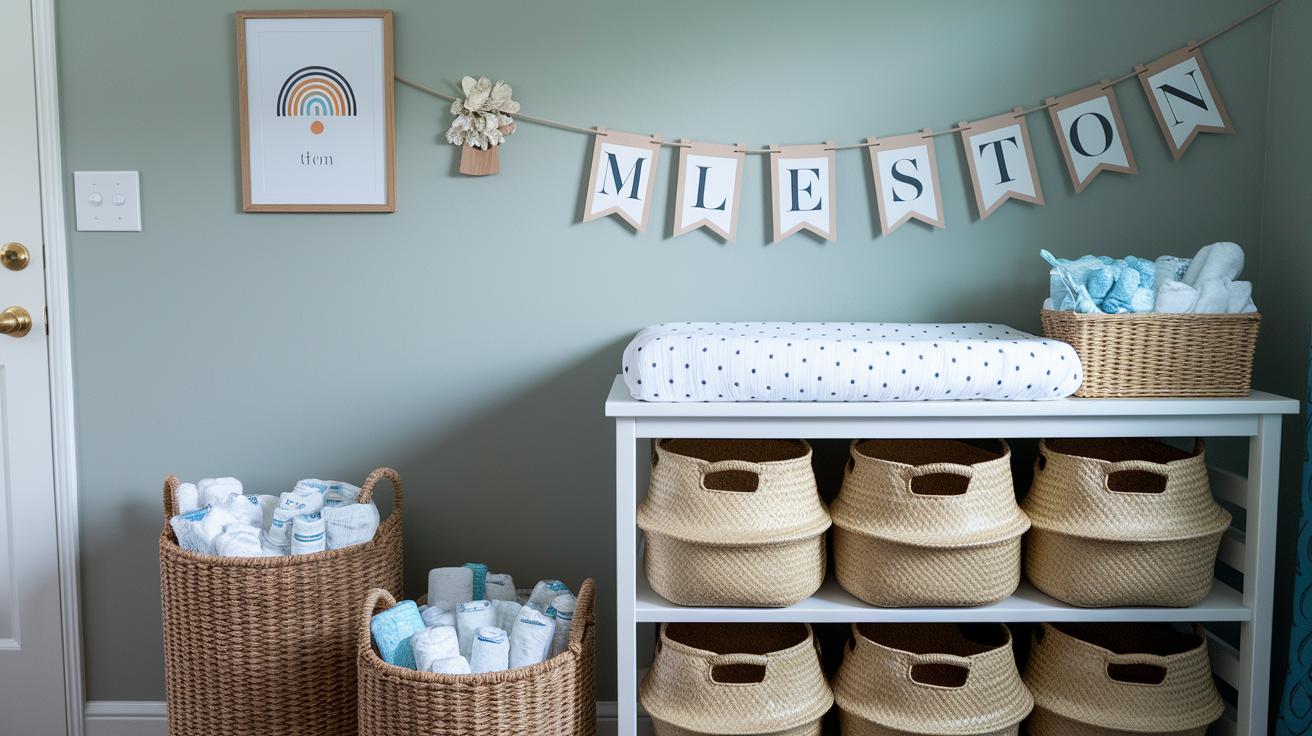
Imagine turning your nursery into a cozy yet clutter-free haven. Smart storage accessories like diaper caddies, market baskets, organizer bags, and changing baskets make everyday life smoother. A diaper caddy kept by your changing table helps you grab wipes and creams quickly, almost like a little mobile closet made just for you.
Try hanging sink bathers, towels, and washcloths nearby or tucking them into a basket for easy reach. Picture having milestone cards and baby brushes neatly stored in small pouches attached to shelves. It’s like having everything you need right at your fingertips when bedtime or naptime rolls around.
Think about using furniture that does double duty. A bench with storage can hide extra blankets or small toys, while under-bed bins fit perfectly beneath your co-sleeping area. And modular shelving that adjusts as your little one grows can help you make the most of every inch, keeping your space smart and safe.
Enhancing Comfort and Sleep Quality in a Co-Sleeping Nursery

Creating a comfy nursery means keeping it cool and fresh. Try setting the room temperature between 68 and 72°F so that everyone feels snug and ready for sleep. A smoke-free space with plenty of fresh air not only makes the air feel pure but also gives the room a welcoming vibe.
Managing noise and light can add another layer of calm to your sleep space. White noise machines can offer a soft hum, kind of like a quiet lullaby that mutes unexpected household sounds. Using dark curtains helps block extra light at bedtime, turning the room into a cozy retreat. A simple dim lamp or a gentle nightlight can create a warm glow, supporting deep, peaceful rest.
Choosing the right bedding is key too. Go for hypoallergenic fabrics (made to lower allergy risks) that feel soft on your baby's skin. Breathable materials keep little ones cozy and help prevent irritation, setting the stage for a night of better sleep for both baby and parent.
Long-Term Maintenance and Growth Planning for Co-Sleeping Nursery

Keeping your baby's sleeping space clean is key to a safe, cozy environment. Make sure to wash mattress pads, sheets, and blankets often so allergens stay away. A simple cleaning routine can help a lot, especially when you stick to safe sleep tips until your baby’s first birthday. A tidy space not only keeps your little one comfortable but also lets you enjoy those calm, quiet nights.
As your baby grows from crawling to toddling, it makes sense to adjust the nursery furniture too. Opt for pieces that can grow with your child. You might find that moving from a side-by-side setup to a standalone crib is an easy way to transition to solo sleep. Little changes like these make the space safer and more flexible while keeping your maintenance routine simple and effective.
Final Words
In the action, we explored ways to create a safe sleep environment for both baby and parents by focusing on co-sleeping safety and SIDS prevention with clear safety protocols. We covered layout ideas, smart furniture choices, efficient storage, and tips for keeping the room cozy with proper temperature, lighting, and bedding. Our guide showed how to adapt the space as baby grows while maintaining essential safety standards. Setting up a co-sleeping nursery can be both nurturing and straightforward, making bedtime a comforting and secure experience for everyone involved.
FAQ
What do pictures of safe co sleeping show?
Pictures of safe co sleeping show cozy, well-organized sleep setups with firm mattresses and proper baby positioning. They help you see how to create a secure space for your little one next to you.
What is a co sleeping bed attachment?
A co sleeping bed attachment is a secure device that connects to your bed, creating a safe area for your baby. It helps keep your baby close and makes nighttime care easier.
What is a co sleeper for baby in bed?
A co sleeper for baby in bed is a specially designed sleep space attached to your adult bed. It provides safe boundaries and a firm surface so your baby stays secure while you sleep.
What are safe co sleeping positions, including the C position and safe co sleeping 7?
Safe co sleeping positions include arrangements like the C position, where your baby lies along your chest, and other recommended stances that keep your baby secure and close while reducing risks.
What are Dr. James McKenna’s safe co sleeping guidelines?
Dr. James McKenna’s guidelines stress using a firm surface, removing loose bedding, and placing your baby in a clear, safe space next to you. These tips help lower sleep risks and promote closeness.
How do you practice safe co sleeping with a baby on your chest?
Sleeping with your baby on your chest means keeping both of you in safe positions with firm support and careful monitoring, ensuring your baby feels secure while you share a warm, skin-to-skin bond.


