
Have you ever thought that your baby's favorite toy might carry more germs than your bathroom door handle? It might sound odd, but it can really make you rethink your cleaning routine.
Keeping playthings clean is a big deal. A simple weekly cleaning routine, sort, rinse, and dry, can make playtime safer and even more fun.
Imagine giving your little one a clean, safe toy to cuddle with each day. It’s like offering a gentle, fresh hug every time they play. Let's make toy cleaning easy and worry-free for both you and your baby.
Core Steps on How to Clean Baby Toys Safely
It’s really important to clean your baby’s toys every week. Babies tend to put toys in their mouths, which can lead to germs and dirt spreading quickly. A weekly routine not only keeps those germs at bay but also makes playtime a lot safer. Pick a day that works well for you, maybe when you do laundry, and add it to your list. When you notice toys with drool or any visible dirt, it’s your cue that they need a wash. Fun fact: some toys can hold more germs than a bathroom doorknob! It just shows how valuable a weekly cleaning habit can be.
- Gather all the toys and sort them by material. Separate plush, plastic, wood, and electronic toys so you know which cleaning method to use.
- Rinse off toys that are really dirty first. A quick rinse under cool water can remove most of the dirt and drool.
- Clean with warm, soapy water. Use a gentle, baby-safe dish soap, like Dawn, for plastic or silicone toys.
- Disinfect nonporous toys with a safe solution. You can use a diluted bleach solution (but never mix bleach with other chemicals) or a baby-safe disinfectant.
- Rinse thoroughly so all soap or disinfectant is gone. This helps make sure your baby isn’t left with any chemical traces.
- Let the toys air-dry completely. Place them on a clean towel until all moisture is gone, preventing any bacteria from growing.
Stick to this routine every week. Not only will you keep the toys sparkling clean, but you’ll also have peace of mind knowing your little one’s play area is safe.
Choosing Safe Cleaning Agents for Baby Toy Sanitization

Keeping your baby's toys clean is super important. You want to make sure you’re not using harsh chemicals that could upset your little one’s delicate skin, yet you still need to get rid of germs. That’s why I like to use non-toxic cleaning solutions that are effective and gentle at the same time.
Here are three simple options you might want to try:
-
Vinegar
Vinegar is a natural, inexpensive option that works surprisingly well against many bacteria. Just mix equal parts vinegar and water (a 1:1 ratio) to create a safe cleaning solution.
Pros: It’s natural and easy to find.
Cons: It might not take care of every type of microbe. -
Baking Soda with Vinegar Combo
Baking soda alone won’t disinfect, but when you mix it with vinegar, you get a fun fizzy reaction that helps control bacterial growth. Start with a tablespoon of baking soda dissolved in a cup of water, then add an equal amount of vinegar to boost the cleaning power.
Pros: It’s a boost to cleaning without nasty chemicals.
Cons: It shouldn’t replace a full disinfecting process by itself. -
Commercial Baby-Safe Cleaners
There are special products made just for cleaning baby toys, like Force of Nature, Attitude Baby Leaves Toys & Surfaces Cleaner (unscented, EWG Verified), and Dapple Toys & High Chair Cleaner.
Pros: They’re designed to be both safe and effective on your child’s toys.
Cons: They might cost a little more than homemade solutions.
Each of these options has its own benefits and little drawbacks. Pick the one that fits best with your routine, and remember that ensuring your baby's play area is both safe and clean is one of the many ways you show your love and care each day.
How to Clean Plastic, Silicone, and Dishwasher-Safe Baby Toys
Keeping your baby’s plastic and silicone toys clean is easier than you might think. Most of these toys just need a gentle hand wash with warm water and a baby-safe dish soap. It’s pretty much like giving them a mini spa treatment, you know, that moment when you pause and take care of the little things. Just remember, many plastic toys don’t do well with the high heat in a dishwasher. But if you have a solid silicone toy, a gentle dishwasher cycle with mild soap can work just fine.
When it comes to battery-operated or electronic toys, avoid soaking them. Instead, simply use a damp cloth to wipe away any mess. It’s a quick fix that keeps the toy clean without risking damage.
| Toy Type | Cleaning Method | Precautions |
|---|---|---|
| Solid Silicone | Dishwasher (gentle cycle) | Avoid high heat |
| Plastic Bath Toys | Sink wash with soap | Check heat tolerance |
| Electronic-Safe Plastics | Wipe with damp cloth | No submersion |
After washing, make sure to rinse the toys really well so that no soap or disinfectant hangs around, they need to be safe if your little one decides to pop them in their mouth. Then, let them air dry completely on a clean towel before they jump back into playtime. It’s like letting them take a little nap before their next adventure.
Cleaning Wooden, Cloth, and Plush Baby Toys with Gentle Techniques
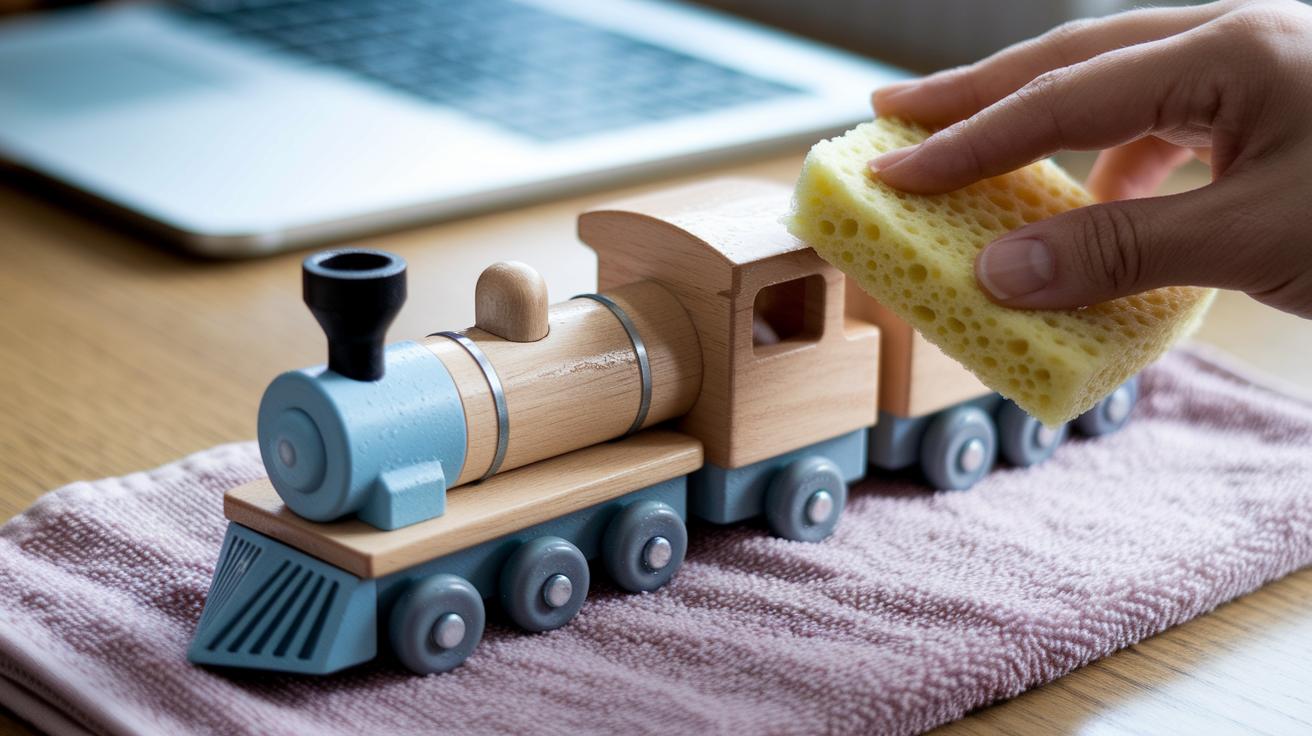
Wooden toys need a little extra love since they can soak up liquids. Start by washing them in warm, soapy water using a mild detergent, and then rinse with cool water. Imagine cleaning your wooden train with a soft sponge swirled in warm water to lift away all that dust. You can also use a mix of equal parts vinegar and water (vinegar helps break down germs gently) to wipe the toy's surface. Once you’re done, let the wooden toy air-dry completely on a clean towel.
For cloth and plush toys, first check the care label to see if machine washing is safe. If it is, run them on a gentle cycle with a mild detergent. Think of your baby's cuddly bear like your favorite soft sweater, a gentle wash keeps it cozy and soft. If a toy isn’t meant for the machine, spot clean it using a soapy cloth. You might also try putting it in a mesh laundry bag to protect its seams, especially if there are any stubborn spots. For any stains, dab a little baby-friendly soap mixed with water on the area and rinse it out well.
Handcrafted cotton or crocheted toys need a tad more care. Soak these special items in cool water with a bit of gentle soap for about 10 to 20 minutes. Then give them a good rinse to remove any soap left behind. Finally, let them dry on a flat clean towel. Keeping up with this weekly cleaning routine helps ensure your baby’s toys stay safe and inviting, ready for lots of playful moments.
Best Practices for Cleaning Electronic and Battery-Operated Baby Toys
Cleaning your little one's electronic or battery-powered toys takes a bit of extra care. Water or cleaning sprays can hurt the toy’s tiny internals, so never soak them. Instead, stick to a gentle cleaning routine to keep everything safe.
-
Remove the batteries. Before you start cleaning, take out the batteries to protect both them and the toy’s electronic parts.
-
Gently wipe all surfaces. Use a damp cloth with just a little mild soap to clear off visible dirt and grime.
-
Rinse the toy. Right after you wash, wipe it again with a clean damp cloth to get rid of any soap residue. Leftover soap might cause problems later on, so take your time.
-
Dry it well. Focus on seams and battery compartments by leaving the toy to dry completely on a clean towel. This step is key to keeping moisture away.
Once everything is totally dry, go ahead and pop the batteries back in. This careful process helps keep your child’s electronic play gear safe and ready for fun.
Scheduling and Frequency in How to Clean Baby Toys

It might feel like just another chore, but keeping a steady cleaning routine really brightens up your baby's play space. Cleaning toys once a week helps stop germs and bacteria from building up, especially since little ones often bring toys to their mouths. You might even choose a special day, like baby laundry day, to keep things on track. And if there are really popular toys, cleaning them a bit more often can make a big difference.
Here’s a handy mini-checklist to help you out:
| Weekly Tasks |
|---|
| Deep clean all toys using the proper method for each material. |
| Sort toys into groups (like plastic, wood, fabric) for a targeted cleaning approach. |
| Sanitize nonporous items (those that don’t absorb liquids) with a baby-safe disinfecting solution. |
| Daily Spot-Checks |
| Take a quick look at the toys for any visible dirt, drool, or sticky messes. |
| Wipe down any toys as needed with a damp, baby-safe cloth. |
Once your little one stops putting toys in their mouth, usually around age three, you can dial back the deep cleaning and focus on routine spot cleaning instead.
Troubleshooting Common Baby Toy Cleaning Challenges
Sometimes, even when you stick to a cleaning routine, little issues pop up. It can be frustrating when your baby's favorite toy needs a bit of extra care.
-
Tough Stains
When you see a stubborn mark on a plastic or fabric toy, try making a simple baking soda paste. Mix baking soda and water in a 3:1 ratio and gently rub it onto the spot. Let it sit for about 15 minutes. Then, rinse the toy with a little water. Imagine giving a stained building block a mini spa treatment, it often wipes the stain right away. -
Odor Elimination
If you notice a faint smell that just won’t go away, soak the toy in a vinegar-and-water mix made equal parts (1:1). Allow the toy to soak for 30 minutes, then rinse it well and let it air-dry. This natural fix helps clear out odors without any harsh chemicals. -
Bleach Mishaps
When using a diluted bleach solution on nonporous plastic toys, always follow the label instructions. Let the solution work for about 10 minutes on the toy then rinse it thoroughly and dry it well. This stops any mildew from forming. If you see cracks or the color seems off, it might be time to try a milder cleaner or even consider replacing the toy.
Always test a small, hidden area first before cleaning the entire toy.
Final Words
In the action, this guide shows clear steps for maintaining a safe play environment while tackling common cleaning challenges. We covered specific routines for plastic, fabric, electronic, and wooden toys, using warm, soapy water, mild disinfectants, and gentle handling. A regular schedule makes it easy to keep toys fresh and safe for your little one.
Following these methods when learning how to clean baby toys keeps the process simple, manageable, and effective. Enjoy a hassle-free routine and take comfort in knowing your baby’s playtime stays safe and clean.
FAQ
How do I clean baby toys that can’t be washed?
Cleaning baby toys that can’t be washed means using a damp cloth with mild soap to gently wipe surfaces. Dry completely to prevent moisture damage and maintain the toy’s durability.
How do I clean baby toys at home?
Cleaning baby toys at home focuses on a routine using warm, soapy water, gentle scrubbing, thorough rinsing, and air-drying. A weekly cleaning schedule helps reduce germs and keeps toys safe.
How do I clean baby toys in a washing machine?
Cleaning baby toys in a washing machine works for dishwasher-safe items. Place them in a mesh bag, use a gentle cycle with mild soap, then rinse and air-dry immediately while following manufacturer instructions.
How do I clean baby toys with vinegar?
Cleaning baby toys with vinegar means using a diluted vinegar solution to wipe surfaces. The vinegar removes dirt and germs naturally; always rinse well and air-dry to eliminate any leftover vinegar.
How do I disinfect baby toys naturally?
Disinfecting baby toys naturally involves using diluted vinegar or other baby-safe, chemical-free disinfectants. Wipe each toy thoroughly, rinse well, and allow to air-dry for safe, germ-reduced play surfaces.
How do I disinfect baby toys that go in the mouth without harmful chemicals?
Disinfecting mouth-safe baby toys can be done using natural cleaners like diluted vinegar or wipes labeled as baby-safe. Rinse each toy well after cleaning so no residues remain for your little one.
How do I clean baby toys with batteries?
Cleaning baby toys with batteries requires removing the batteries first, then wiping the toy with a damp cloth and mild soap. Avoid submerging electronic parts and dry the toy completely before reinserting batteries.
What is the best disinfectant for baby toys?
The best disinfectant for baby toys is one that is baby-safe and non-toxic, such as a diluted bleach solution for nonporous items or a commercial cleaner verified for children’s use. Rinse toys thoroughly afterward.
What is the safest way to clean baby toys?
The safest way to clean baby toys is to use warm, soapy water—like mixing Dawn dish soap with water—wash carefully, rinse completely, and let them air-dry so no cleaning residue touches your child.
Are Clorox wipes safe to use on baby toys?
Using Clorox wipes on baby toys is not advised unless the product is labeled safe for children. If used, rinse the toys thoroughly afterward to remove any chemical traces that could be harmful.
Can I use Dawn dish soap to clean baby toys?
Yes, using Dawn dish soap is effective for cleaning baby toys. It helps remove dirt and germs; just mix with warm water, wash gently, rinse well, and dry completely before your child plays.
How do daycares sanitize toys?
Daycares sanitize toys by washing them with warm, soapy water, disinfecting with baby-safe products, and following strict cleaning schedules. They also rinse thoroughly to minimize germ risks for children.


